

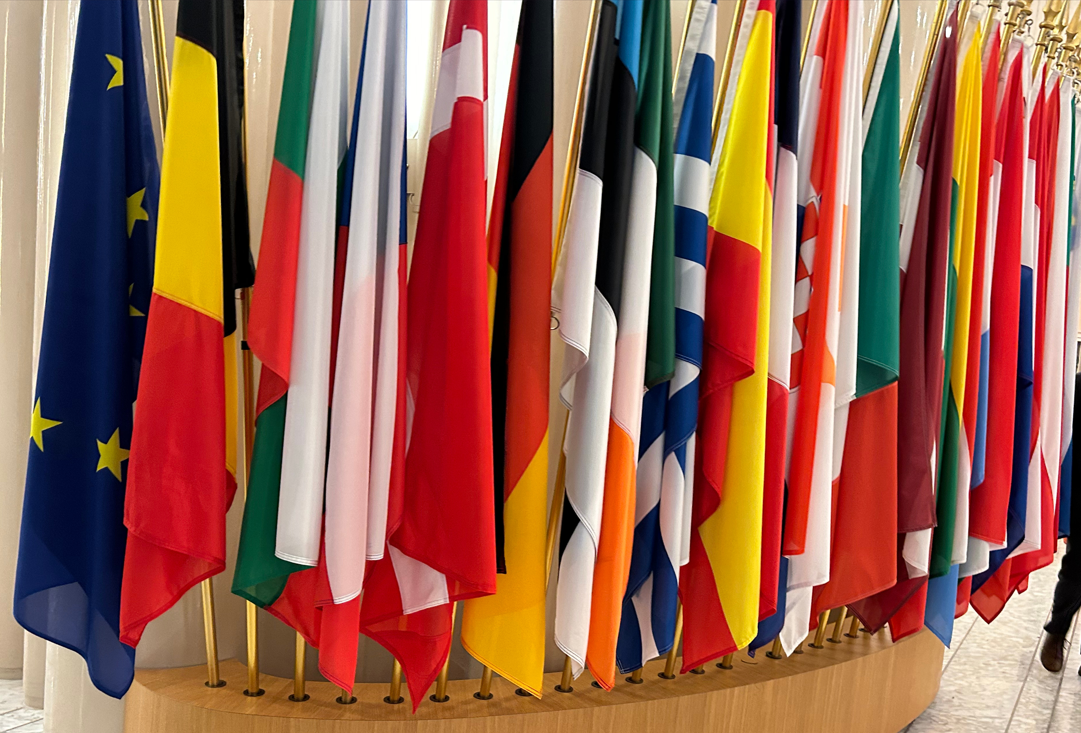
The Association for Stroke and Aphasia (ASA) together with its partners from the European Alliance for Cardiovascular Health (EACH), took part in a major event at the European Parliament in Strasbourg from 11th to 14th December 2023.
Members of the European Parliament were called upon to help overcome cardiovascular diseases. The significance of the problem, its severe social and economic burden for Europe, motivated EACH to propose the adoption of a pan-European plan for cardiovascular health. By such consolidated European global framework, the individual strategies for dealing with the problem of each of the 27 member states can get common focus and additional impetus.
The EACH initiative introduced MEPs to statistics reflecting the current state of each Member State with regard to the most widespread threat to health on the continent: cardiovascular disease (CVD). This initiative was led by a group of 18 partners forming the European Alliance for Cardiovascular Health (EACH).
Cardiovascular disease cost the EU an estimated €282 billion in 2021, counting for more than a third of all deaths and impacting the lives of around 60 million people. Widespread perceptions about these diseases, regarded as "man's disease", are already considered as huge mistake. Today, we know that women are more than twice as likely to die after a heart attack compared to men. Another misunderstanding about the manifestations of these diseases defines them as diseases of adults. Unfortunately, more and more often cardiovascular diseases affect children and young people, a fact that forces us to change our way of thinking.
In Strasbourg, EACH presented the exhibition "Vote Cardiovascular Health 2024", organized by MEP Elżbieta Łukacijewska (Poland) and MEP Radka Maxová (Czech Republic), longtime supporters of cardiovascular health. The exhibition highlighted the impact of cardiovascular disease on each European country, with an online media campaign in parallel that urged leaders to vote for cardiovascular health in 2024, signing a pledge #VoteHealth2024.
"Cardiovascular health is not limited by boundaries. We must seize this opportunity in Strasbourg to prioritise the health of Europeans and work together for a healthier and more sustainable continent," said MEP Radka Maksova.
The Bulgarian representatives in the European Parliament Andrey Kovachev, Radan Kanev, Asim Ademov, Ilhan Kyuchyuk, Petar Vitanov, Tsvetelina Penkova and Iskra Mihaylova also committed themselves with understanding of the cause. They paid significant attention to the event by having interviews with the President of the Association for Stroke and Aphasia, Mrs. Dobreva and the President of the Society of Cardiology in Bulgaria (SCB), Assoc. Prof. Traykov. After the meetings, Mrs. Dobreva and Assoc. Prof. Traykov shared their confidence in the consolidated united support declared by all Bulgarian MEPs regardless of their parties belonging.
Why is this event an important step forward?
First of all, serious progress can be noted in the change of attitude at political level. The outdated approach for considering the topic seeking to solve individual problems caused by different non communicable diseases is not any more active. Serious profound analysis, applying the holistic mechanism and last but not least, using modern tools for big data studies gradually proved how complex and systemic is the CVD problem. This caused a change perspective on policy making in the health sector. Therefore, the modern approach to the problem is to direct the investment of public resources to disease prevention. Complex prevention, which should be directed from the general (main) risk factors for the most significant diseases to the specific (common for individual diseases). This motivated EACH to promote the proposal for "European Cardiovascular Health Plan". In a national context, the event gave an additional motivation for the establishment of a National Alliance for Cardiovascular Health in Bulgaria, which would combine the efforts of a wide range of partners, going beyond the narrow framework of medical aspects of the topic.
Secondly, we noticed major progress in the sensitivity of European health policy makers towards health topic. Proof of this is the fact that the current triple presidency of the EC (Spain-Belgium-Hungary) has taken a historical step, addressing the issue of cardiovascular diseases for the first time in the EU's 30-year history.
Reducing the burden of cardiovascular disease in Europe requires a constant demonstration of leadership and total commitment. An important step in this direction was made by ASA and SCB in their full support of the EACH initiative in the European Parliament, which attracted very high attendance on many levels.