

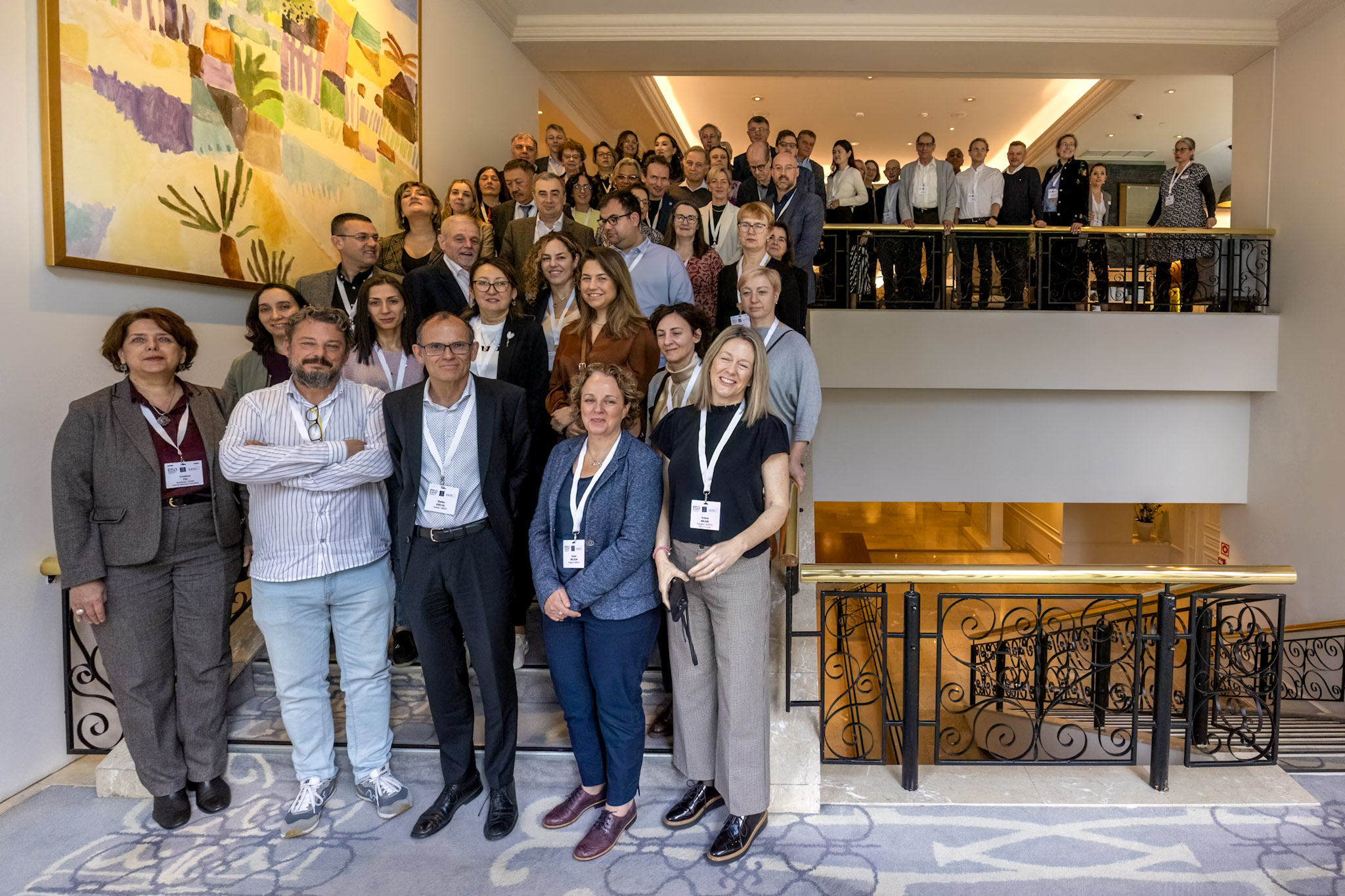
For the second time, SAP-E National Coordinators met for an in-person workshop organised in Lisbon, Portugal from 29-31 January 2024.
Playing a vital role in promoting stroke awareness, prevention, treatment, and care in their respective countries, 60 delegates representing 35 countries came together to share vital insights regarding national accomplishments and obstacles in their implementation of the Stroke Action Plan in 2023. The programme structured around lectures, interactive sessions and breakout discussions fostered a productive and collaborative atmosphere, yielding valuable insights that will support the important goal for reducing the burden of stroke in Europe.
All Coordinators were also invited to present their respective national advances in all basic stroke care fields in 2023, providing a glimpse of their dedication to the SAP-E work and based on the KPIs.
Very interesting was the fact that in each country there is a different level of dedication to the goal of building a national strategy and implement a national stroke action plan. As common features of the reported work, the national coordinators reported the slow pace of work, the pronounced fragmentation of the participants and the disproportions in the degree of readiness to implement the plan in different countries plus political instability in many of the countries. Bulgaria proved positive achievements compared to many European countries with successful and notable campaigns for stroke awareness among the population as well as the presence of the first club for peer-to-peer support and "life after stroke". This achievement of the Association for Stroke and Aphasia was complemented by the prolonging by the MH of the clinical pathway for the acute stroke treatment.
Dorina Dobreva concluded upon her return:” The efforts we make in Bulgaria are serious, but unfortunately, they are limited to the resources and capacity of each of our organizations. Coordinated and targeted actions, supported by funds, are unfortunately still missing.
We need to go back to the active phase of the working group at the Ministry of Health and continue working together on the National Stroke Plan. At this point there are new opportunities to consider this plan as a meaningful, invariably integrated and essential part of the National Plan for Cardiovascular Health.”
The Association for Stroke and Aphasia will take another step to help the development and implementation of the National Stroke Plan by creating in 2024 a special section in the website – https://stroke.bg, where we will provide monitored information on the current state of progress on all Key Performance Indicators stated in the European Stroke Plan. We believe that the time in which we do not work closely with the other participants in the process should not be wasted time for the Stroke Support Organization (ASA) in Bulgaria to work hard to achieve the main goal: reducing the number of strokes in the country, modern and affordable acute stroke treatment and a decent and quality life for stroke survivors and their caregivers.